
 27 February 2026
 Anika Leimbrink
Hydrogen driving economic growth: Emsland leads the way
Emsland is the largest district in Lower Saxony by area. Located near the Dutch border, it has also become one of Germany’s pioneers in hydrogen. With its sights firmly set on the future, the district has decided on an investment that is sending a strong signal for the hydrogen ramp-up, securing a total of 13 connections to the core hydrogen network, specifically the North Sea Ruhr Link III.
It’s a commitment that deserves recognition. To mark the occasion, Emsland joined OGE at the end of February for a ceremonial contract signing attended by representatives from politics, business, society and the media. The event took place at the district headquarters in Meppen. Although unable to attend in person, Lower Saxony’s Minister for Economic Affairs, Grant Hendrik Tonne, joined digitally and delivered a keynote address alongside District Administrator Marc-André Burgdorf and Detlef Brüggemeyer from OGE’s board of management. In his speech, the Minister highlighted Emsland’s contribution to Germany’s energy security,noting how the district is positioning itself as a central hub for hydrogen in Germany and is actively driving the energy transition with major industry and infrastructure projects. He also remarked on how significant investments in electrolysers, pipelines and innovative applications are ensuring the emergence of a key region for renewable energy here. All this helps to strengthen Germany’s energy security and crucially advance the development of a national hydrogen network – a prerequisite for the decarbonisation of German industry, as the Minister from Lower Saxony was keen to emphasise.
The fact that the district made this investment decision is due in no small part to OGE. After all, with its involvement in the planning, construction, and future operation of hydrogen pipelines such as the North Sea Ruhr Link III, the company provides the reliability required for investments like this. Step by step, OGE and other gas network operators are developing the hydrogen core network, which will form the lifeline of a future hydrogen infrastructure for Germany. In his keynote address, Detlef Brüggemeyer used the image of a band – the hydrogen band – in which OGE, as the infrastructure operator, sets the tempo and lays the groundwork for a harmonious whole. But a good band, he continued, needs more players: Where the hydrogen ramp-up is concerned, these are the producers, consumers, traders, infrastructure operators, and also policymakers as supporters and framework-setters. While OGE leads the way and creates the reliability needed for investments, the other band members must still perform – or rather, consolidate – their roles, and this, Detlef Brüggemeyer noted, calls for staying power, perseverance, and the will to keep at it. The Emsland district is pursuing this path toward a hydrogen future, and by doing so is playing a pioneering role.
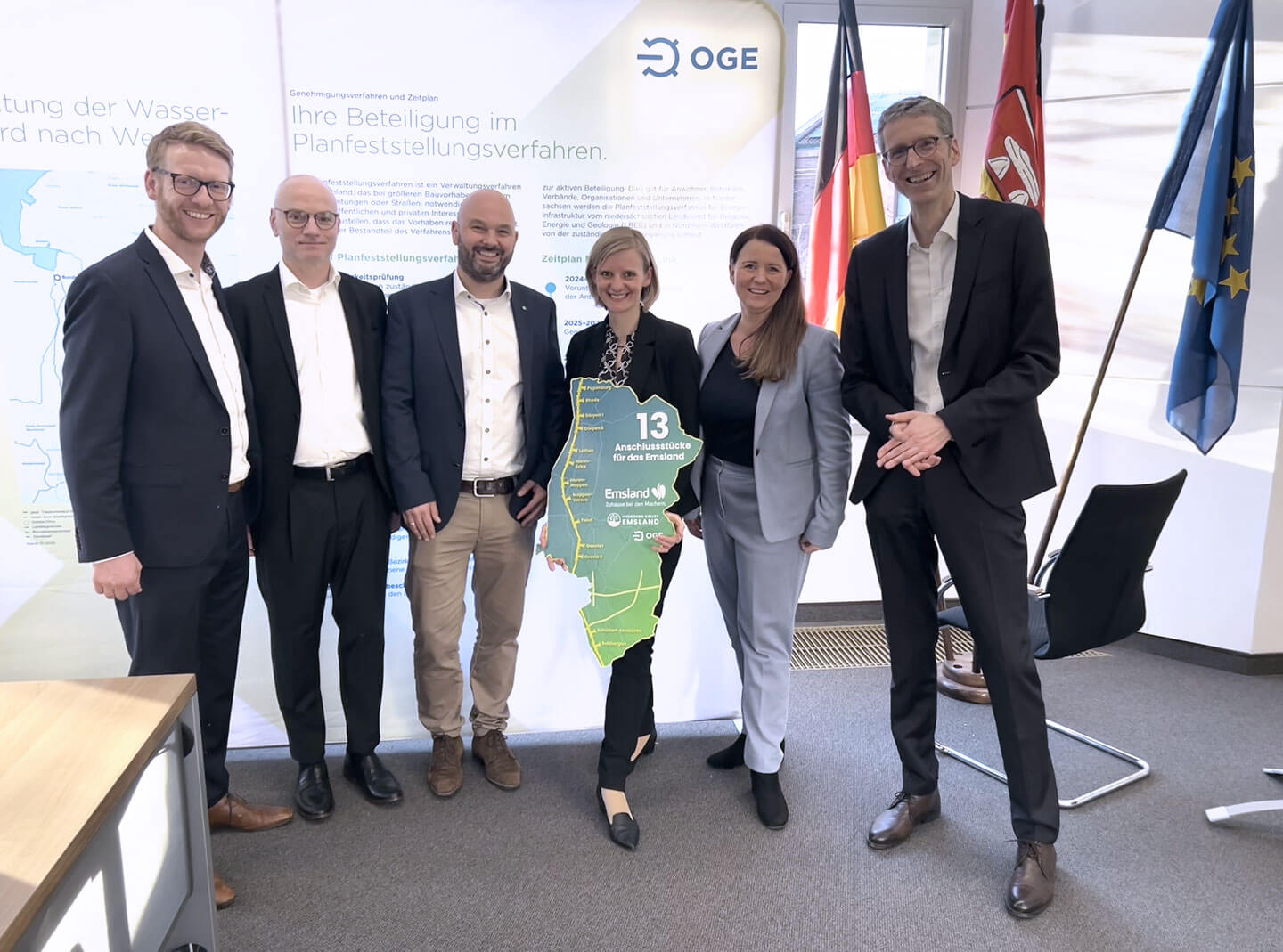
Celebrating the connection of the Emsland district to the North Sea Ruhr Link III hydrogen pipeline: the OGE team with (from left) Nick Schulz, Elmar Scholl, Michael Stroetmann, Anika Leimbrink, Selina Breilmann and Detlef Brüggemeyer
Background: The Emsland district has secured a total of 13 connections to the North Sea Ruhr Link III, a hydrogen pipeline stretching around approximately 122 km from Bunde to Wettringen in North Rhine-Westphalia. Most of the route runs through Emsland and is being developed by OGE, creating a direct link to Germany’s hydrogen core network. To prepare for this opportunity, municipalities and regional businesses joined forces to identify hydrogen potential, raise awareness and strengthen cooperation across the region. This collaborative approach enabled the district to plan and coordinate the connections well in advance, while arranging financing in close partnership with local authorities. Eleven connections will serve the Emsland district directly, with one more going to EWE NETZ in Dörpen and another serving the municipal utility of Schüttorf-Emsbüren. The North Sea Ruhr Link III is currently undergoing the planning approval process and is set to enter the construction phase later this year, with operation scheduled by the hydrogen core network to begin in 2027.
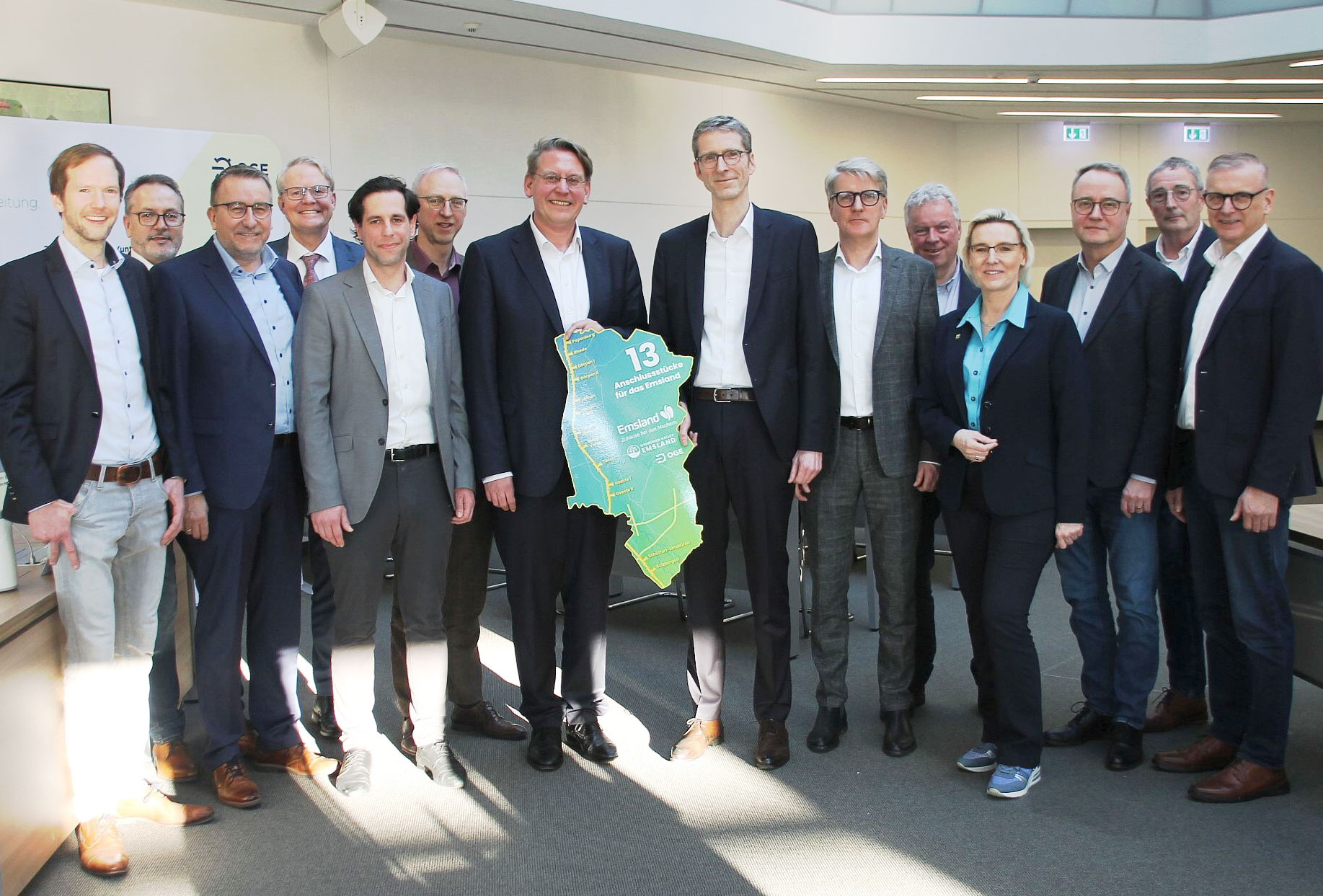
Official signing of the Emsland district’s connection to the North Sea Ruhr Link III with representatives from local government and business